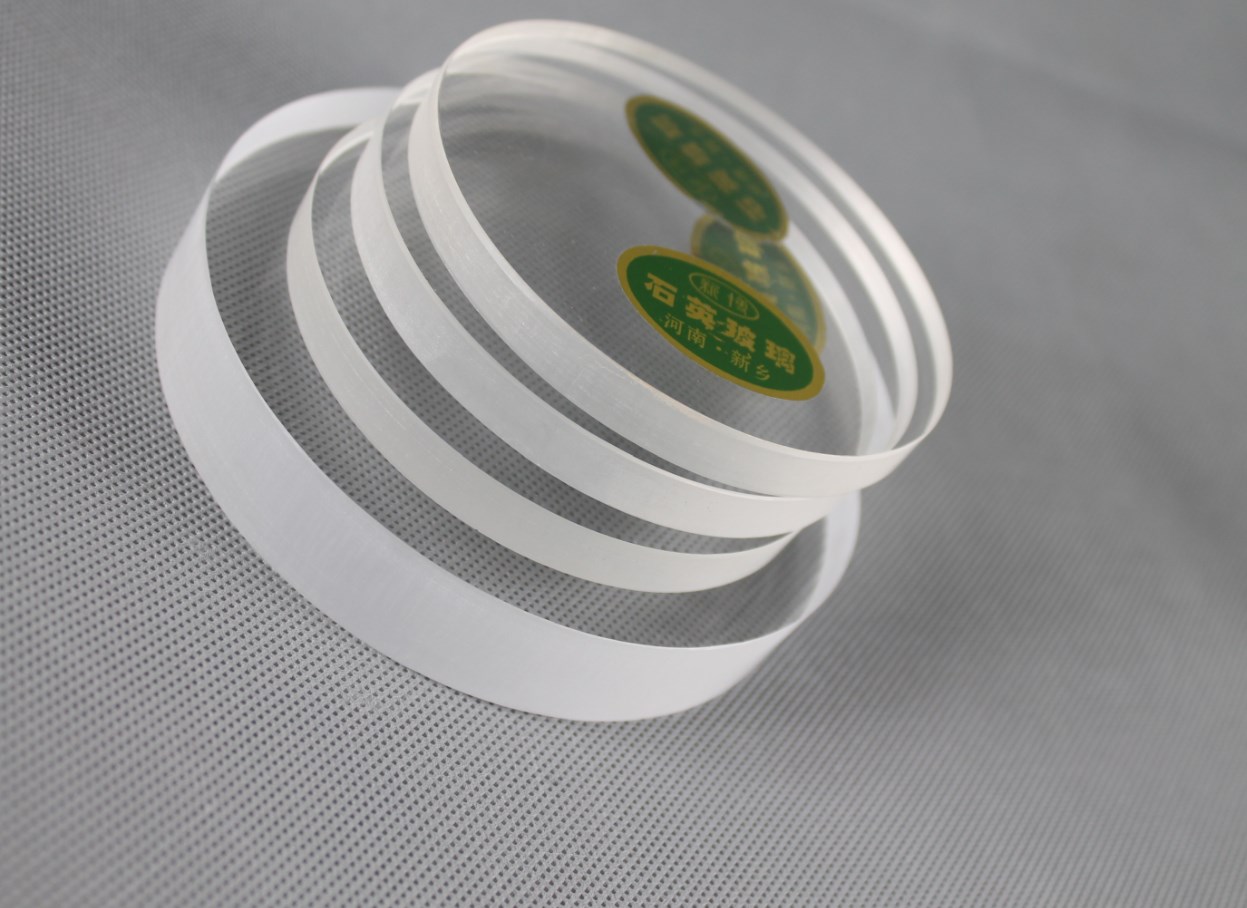
In modern industrial production systems, a large number of reaction vessels, pressure pipelines, boiler vessels, and chemical tanks are operating in a closed state. The internal material reactions, liquid levels, and medium flow of the equipment cannot be directly observed with the naked eye. To grasp the internal working conditions in real time, it is necessary to rely on the core component of the mirror glass. Among numerous mirror materials, quartz mirror glass has become the preferred product for high-temperature and harsh working conditions due to its comprehensive advantages of high temperature resistance, thermal shock resistance, and strong chemical stability. It is widely used in many industrial fields such as chemical, pharmaceutical, food, energy, and thermal industries.
Quartz mirror glass is mainly made of high-purity silica quartz raw material, which is fired and processed. After multiple precision processes such as cutting, grinding, chamfering, polishing, and cleaning, it is processed into standard circular lenses, which are commonly known as quartz glass mirrors. Unlike ordinary tempered glass and high borosilicate glass mirrors, the core highlight of quartz material lies in its ultimate heat resistance. Its coefficient of thermal expansion is extremely low, able to withstand rapid alternation of hot and cold, and will not explode due to temperature differences caused by equipment heating and cooling. It can operate continuously in high temperature environments for a long time and can adapt to many ultra-high temperature equipment scenarios that ordinary glass cannot withstand.
In addition to its outstanding high-temperature resistance, quartz mirror glass also has outstanding chemical corrosion resistance. Faced with various chemical media such as strong acids, weak bases, and organic solvents, high-purity quartz material is not easily corroded by the media, and will not exhibit surface atomization, yellowing, or corrosion induced loss of transparency. The lens can maintain high light transmittance for a long time, allowing operators to clearly see the color, liquid level, and reaction status of the materials inside the container through the lens, avoiding observation errors caused by lens corrosion and blurring, and providing reliable visual evidence for on-site safety production.
In terms of product craftsmanship details, the edges of quartz mirror glass are precision chamfered. Glass is a brittle material, and when installing and tightening flange covers with sharp edges at right angles, it is easy to generate stress concentration, resulting in breakage and hidden cracks. After later use, the cracks will gradually expand, ultimately causing the lens to rupture. After chamfering and edge grinding, the hidden edge stress is eliminated, and the fit of the sealing gasket is better when assembling, reducing the risk of installation damage and improving the overall service life. Every finished lens undergoes appearance screening to strictly control defects such as bubbles, stones, scratches, etc. Small internal defects can evolve into safety hazards under high temperature and pressure conditions. Therefore, industrial grade quartz mirrors have strict standards for raw material and finished product testing.
The selection of quartz mirror specifications in the market is very flexible, with mature standard sizes available and support for non-standard customization. We can customize circular quartz sight glasses with different diameters and thicknesses based on the actual parameters of the customer's equipment flange, sight cup, and observation port. The thickness parameter directly corresponds to the pressure bearing capacity, and the larger the thickness, the higher the working pressure that the lens can withstand. When selecting, it is not enough to only consider the diameter size. Working temperature, working pressure, and the type of medium in contact are all key parameters that cannot be ignored. Many customers easily confuse quartz mirrors with high borosilicate mirrors: high borosilicate mirrors have a high cost performance ratio and are suitable for medium temperature conditions; When the operating temperature of the equipment is very high or there is frequent thermal shock, quartz sight glass is a more reliable choice.
Its application scenarios cover various industries. In the petrochemical industry, quartz sight glasses are installed on various reaction vessels and synthesis tanks to observe the entire process of chemical raw material reactions; In the pharmaceutical industry, fermentation tanks and purification equipment rely on sight glasses to monitor the status of materials; In the field of food processing, steaming equipment and sterilization tanks use quartz sight glasses, which can withstand high temperature steam and meet the requirements of clean production; Boilers, thermal pipelines, heat treatment equipment, and quartz sight glasses withstand steam and high-temperature baking in high-temperature environments; In scenes such as water treatment, new energy, laboratory pressure vessels, etc., the figure of circular quartz sight glasses can be seen.
As a safety component on pressure vessels, quartz sight glass also has proper usage precautions. When assembling, suitable sealing gaskets should be used, and the flange fastening force should be uniform. Avoid unilateral and forceful tightening to prevent local cracking of the lens under stress; Try to avoid hard objects hitting the surface of the lens during use; Regularly conduct visual inspections. If there are scratches, cracks, whitening, or loss of transparency on the lens, it needs to be replaced in a timely manner. Do not continue to operate with defects to avoid safety accidents caused by medium leakage.
Industrial equipment accessories may seem like small circular pieces of glass, but they are crucial for the safe operation of the entire system. Quartz mirror glass transforms the invisible interior of enclosed equipment into a visible window, providing stable and reliable physical and chemical properties to monitor production under high temperature and pressure conditions. It is a low-key but irreplaceable important component in modern industrial equipment.